When your AC stops working in Dubai’s scorching heat, every minute feels like an eternity. While the city’s temperature can soar past 45°C during summer months, most AC breakdowns aren’t cooling system failures—they’re electrical problems that you might be able to fix yourself.
Dubai’s unique environment creates specific challenges for air conditioning systems. The combination of extreme heat, frequent sandstorms, high humidity, and the city’s rapid construction boom means AC units work harder and face different stresses than systems in other climates.
Here are the ten most common AC electrical issues I encounter in Dubai homes and offices, along with practical solutions that can save you time and money.
1. Tripped Circuit Breakers: Dubai’s Power Grid Reality
The Problem: Your AC suddenly stops working, and you notice the circuit breaker has tripped. This happens frequently in Dubai due to power fluctuations and the high electrical load during peak summer months.
Why It Happens in Dubai: The city’s massive electricity demand during summer puts strain on the grid. Many older buildings weren’t designed for today’s high-capacity AC units, and voltage fluctuations are common.
Quick AC Electrical Fix Dubai Solution:
- Locate your electrical panel and identify the tripped breaker (it’ll be in the middle position)
- Turn it fully OFF, then back ON
- If it trips again immediately, you have a short circuit—call a professional
- If it holds, monitor your AC for unusual sounds or smells
Prevention Tip: Avoid running multiple high-power appliances simultaneously during peak hours (2-6 PM).
2. Faulty Capacitors: The Hidden Culprit
The Problem: Your AC’s outdoor unit hums, but the fan doesn’t spin, or the system takes multiple attempts to start.
Dubai-Specific Issue: The extreme heat degrades capacitors faster than in moderate climates. Most capacitors in Dubai need replacement every 3-4 years instead of the typical 5-7 years.
How to Fix:
- Turn off the power to the unit
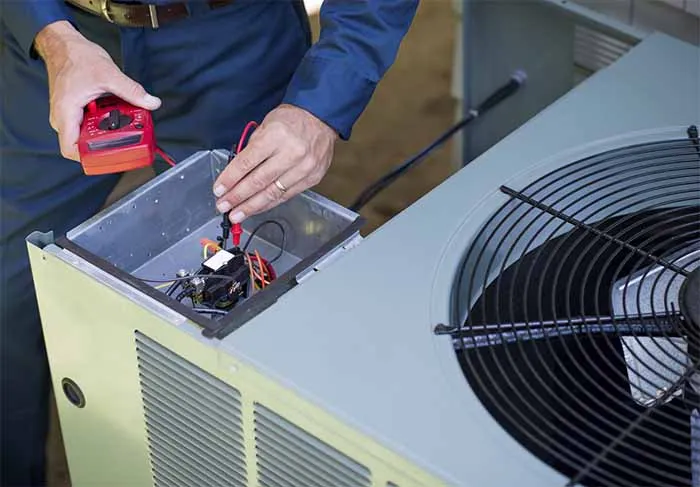
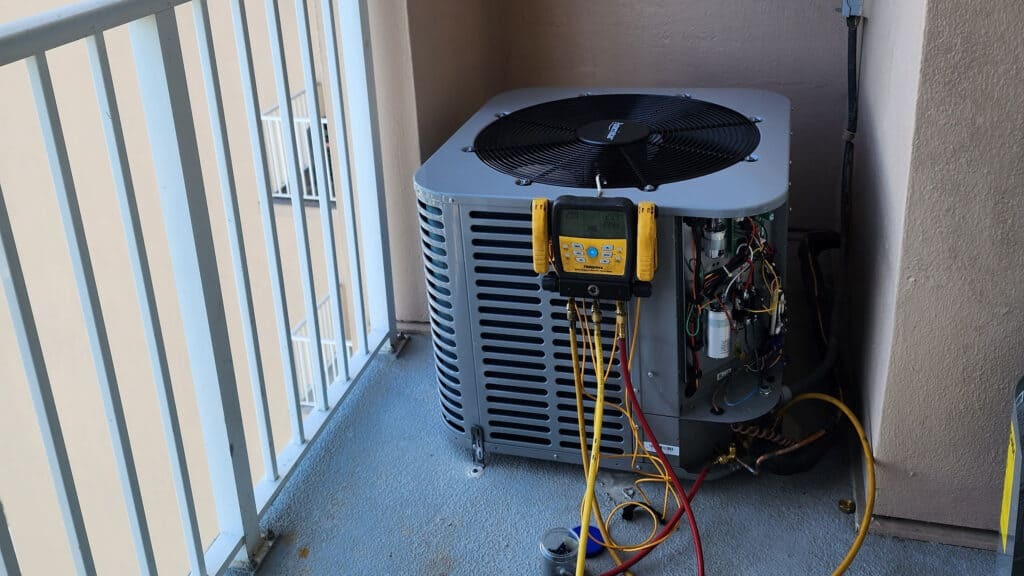
- Remove the access panel on the outdoor unit
- Look for a cylindrical component (capacitor) that may be bulging, leaking, or have a burnt smell
- Take a photo before disconnecting wires
- Replace with an identical capacitor (same voltage and microfarad rating)
Warning: Capacitors store electrical charge even when power is off. Use insulated tools and discharge the capacitor properly.
3. Corroded Electrical Connections
The Problem: Intermittent AC operation, flickering lights when AC starts, or burning smells.
Dubai Factor: The combination of salt air (especially in coastal areas like JBR and Marina), sand, and humidity accelerates corrosion of electrical connections.
Solution Steps:
- Turn off the power at the breaker
- Inspect visible connections for green/white corrosion or loose wires
- Clean corroded connections with a wire brush
- Apply dielectric grease to prevent future corrosion
- Tighten all electrical connections
Location-Specific Tip: If you live near the coast or in areas like Palm Jumeirah, inspect connections every six months.
4. Overloaded Electrical Circuits
The Problem: The AC runs but frequently trips breakers, or other appliances dim when the AC starts.
Dubai Housing Reality: Many villa communities and older apartment buildings have electrical systems that weren’t designed for modern AC loads. A typical 2-3 ton AC unit requires 15-20 amps, but many circuits are only rated for 15 amps total.
Immediate Fix:
- Calculate your AC’s amp draw (check the nameplate)
- Ensure the AC is on a dedicated circuit
- If sharing a circuit, temporarily disconnect other appliances
- Monitor for improved performance
Long-term Solution: Upgrade to a dedicated 20-amp circuit for your AC unit.
5. Thermostat Wiring Problems
The Problem: AC doesn’t respond to thermostat commands, runs continuously, or short cycles.
Common Dubai Mistake: Many residents install smart thermostats without considering Dubai’s extreme temperature ranges and local electrical standards.
Troubleshooting Steps:
- Check thermostat display—if blank, it may not be receiving power
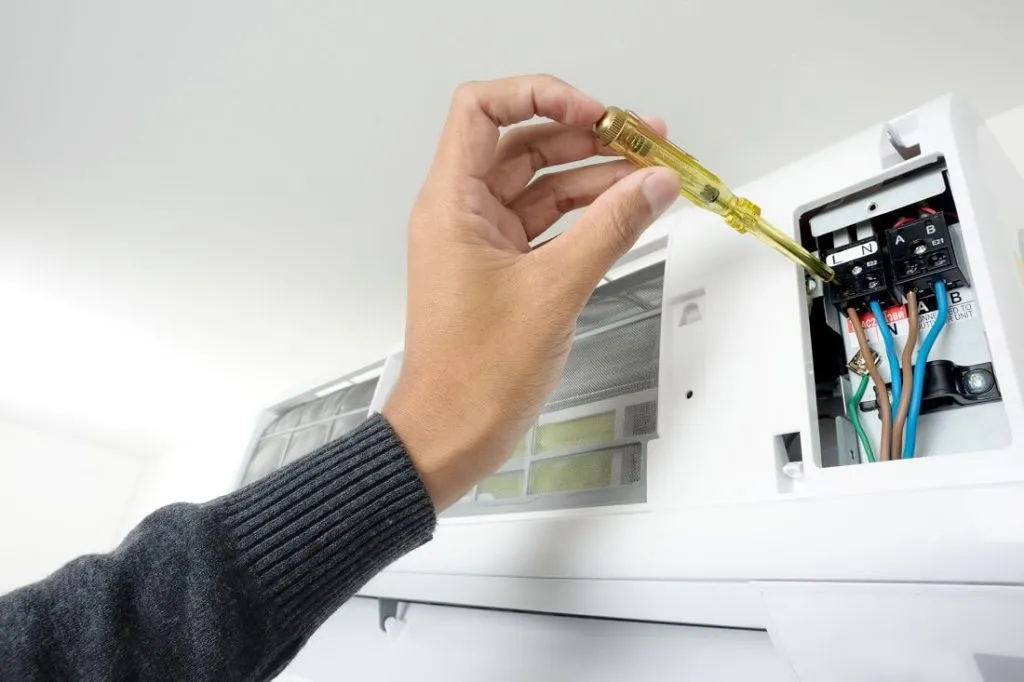
- Verify wire connections at both the thermostat and the AC unit
- Look for loose or corroded wires
- Test the thermostat with new batteries if battery-powered
Dubai Pro Tip: Set your thermostat to 24-26°C instead of 18-20°C. Your system will run more efficiently and last longer in Dubai’s climate.
Read About: 10 Signs Your AC Thermostat Needs Repair in Dubai (And What to Do Next)
6. Dirty or Failed Contactors
The Problem: The Outdoor unit doesn’t start, or you hear clicking sounds but no operation.
Sand and Dust Impact: Dubai’s frequent sandstorms and dusty conditions cause contactors to fail more often than in other climates.
Quick Fix for Dubai Conditions:
- Locate the contactor (square relay box in outdoor unit)
- Turn off the power and remove the cover
- Clean contacts with fine sandpaper if they’re pitted or burnt
- Check for melted or welded contacts
- Replace if severely damaged
Maintenance Tip: Clean your outdoor unit monthly during dust storm season (March-May).
7. Ground Fault Issues
The Problem: GFCI outlets trip when the AC runs, or you get slight shocks from the unit.
Dubai Installation Issue: Many older buildings don’t have proper grounding, and some installations cut corners on electrical safety.
Safety-First Solution:
- Never ignore ground fault problems
- Check that your AC unit is properly grounded
- Test GFCI outlets monthly using the test/reset buttons
- If problems persist, this requires professional attention immediately
Important: Ground faults in Dubai’s humid conditions can be dangerous—don’t attempt DIY fixes.
8. Voltage Fluctuation Damage
The Problem: The AC operates erratically, the compressor struggles to start, or you notice lights dimming frequently.
Dubai Grid Challenge: The city’s growing population and construction boom sometimes strain local transformers, causing voltage fluctuations that damage AC components.
Protection Strategy:
- Install a voltage stabilizer rated for your AC’s capacity
- Monitor voltage at your electrical panel (should be 220V ±10%)
- If the voltage consistently runs high or low, contact DEWA
- Consider a whole-house surge protector
Investment Tip: A good voltage stabilizer costs 500-800 AED but can save thousands in AC repairs.
9. Refrigerant Line Electrical Issues
The Problem: The AC runs but doesn’t cool properly, despite adequate refrigerant levels.
Unique Dubai Problem: Extreme roof temperatures (often 60°C+) can damage electrical connections along refrigerant lines.
Inspection Process:
- Check electrical connections at both indoor and outdoor units
- Look for damaged insulation on wires running outside
- Verify proper electrical continuity in refrigerant line sensors
- Replace any heat-damaged wiring
Prevention: Ensure refrigerant lines have proper UV and heat protection.
10. Control Board Failures
The Problem: AC doesn’t respond to any commands, displays error codes, or operates randomly.
Heat-Related Failure: Dubai’s extreme temperatures can cause control boards to fail, especially in outdoor units that aren’t properly shaded.
Diagnostic Steps:
- Check for error codes on the display
- Verify all wire connections to the control board
- Look for burnt components or unusual smells
- Test with a known-good thermostat
Replacement Note: Control boards are unit-specific. Always match exact model numbers.
When to Call a Professional
While many electrical issues can be resolved with basic troubleshooting, some situations require professional attention:
- Any problem involving the main electrical panel
- Gas line or refrigerant leaks
- Repeated circuit breaker trips
- Burning smells or visible sparks
- High voltage components (compressors, large motors)
Keeping Your AC Running in Dubai’s Climate
Regular maintenance is crucial in Dubai’s harsh environment. Check electrical connections monthly during summer, keep outdoor units clean, and don’t ignore small problems—they become expensive repairs quickly in extreme heat.
Remember, a quick AC electrical fix in Dubai often prevents a much larger problem down the road. Understanding these common issues helps you maintain comfortable temperatures while avoiding unnecessary service calls.
The key is staying proactive rather than reactive. With summer temperatures that can literally be life-threatening, keeping your AC’s electrical system healthy isn’t just about comfort—it’s about safety.
Frequently Asked Questions
Check visible connections monthly during summer (May-September) and every two months during cooler seasons. Dubai’s dusty, humid conditions accelerate corrosion.
Higher ambient temperatures make your AC work harder, drawing more current. Combined with Dubai’s power grid fluctuations during peak demand, breaker trips become more common.
Yes, but exercise extreme caution. Capacitors store electrical charge even when power is off. Use insulated tools, discharge the capacitor properly, and match exact specifications (voltage and microfarad ratings).
Corroded electrical connections due to salt air, sand, and humidity. This causes intermittent operation, reduced efficiency, and eventual component failure if not addressed.
Highly recommended, especially in areas with frequent voltage fluctuations. A quality stabilizer (500-800 AED) can prevent thousands of dirhams in compressor and control board damage.